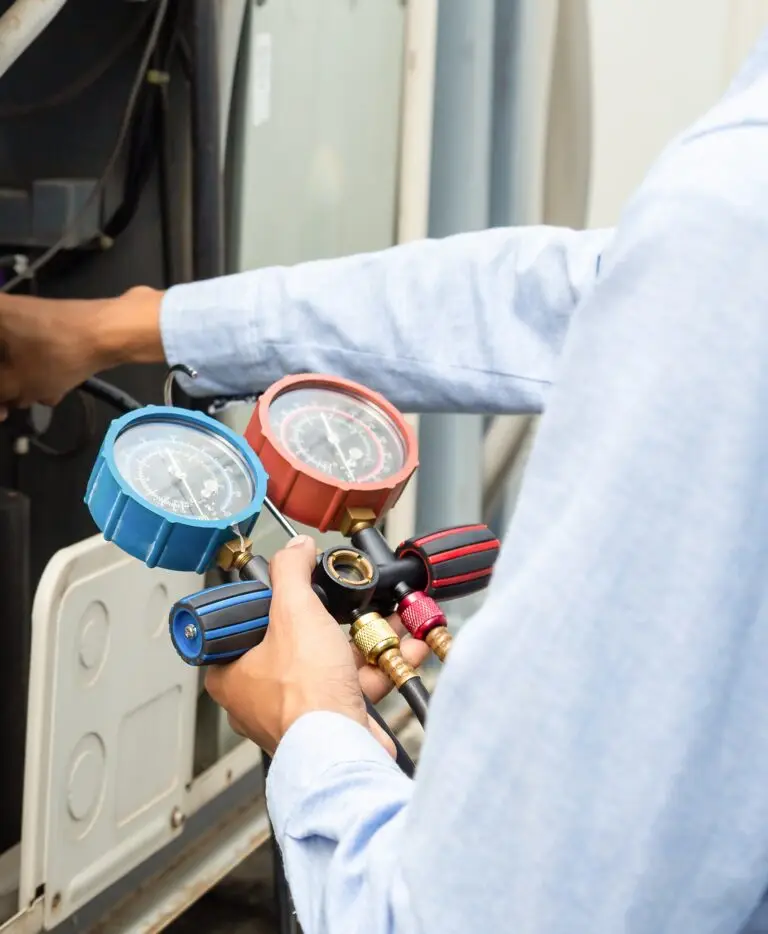
Getting more HVAC leads isn’t a single tactic problem — it’s a system problem. HVAC lead generation works best when multiple channels reinforce each other: local SEO generates long-term organic calls, Google ads fill gaps, referrals compound over time, and email keeps past customers in the funnel. This guide builds that system from the ground up so you know exactly how to get more leads for your HVAC company year-round.
01Local SEO — Your Long-Term Lead Machine
Local SEO is the single highest-ROI channel for HVAC lead generation over a 12-month horizon. When someone searches “AC repair near me” or “HVAC company [city],” the businesses ranking in the Google Map Pack and the organic results get the lion’s share of calls — and those clicks are free.
The challenge is that HVAC SEO requires targeting the right intent at the right time. Emergency repair queries, seasonal tune-up searches, and replacement or installation queries all have different intent profiles and need different pages, different content, and different call-to-action strategies. A single “HVAC services” page can’t capture all of them effectively. And because HVAC companies are service area businesses rather than storefront businesses, your entire SEO approach needs to account for how Google ranks companies that travel to the customer rather than receiving them at a fixed location.
What Actually Moves Rankings for HVAC
- Service-specific landing pages — one page per core service (AC repair, furnace installation, heat pump, duct cleaning, etc.), each targeting its own keyword cluster
- City + service pages — dedicated pages for every market you serve, targeting “AC repair [city],” “HVAC contractor [city],” etc.
- Technical SEO — fast load times, mobile-first design, clean schema markup, Core Web Vitals compliance
- Local backlinks — citations, chamber memberships, local press mentions, supplier partnerships
- E-E-A-T signals — author bios, licenses prominently displayed, real photos of your team and trucks, years in business
Don’t target “HVAC” as your main keyword — it’s too broad and mostly informational intent. Target action phrases like “AC repair [city],” “emergency HVAC [city],” and “HVAC replacement cost [city].” These bring buyers, not browsers. Each of these deserves its own dedicated page, not a mention on a general services page.
For a deeper look at which keywords to prioritize, our HVAC keyword guide breaks down the highest-converting terms by intent type, and our AC repair SEO guide covers how to specifically rank for emergency searches — the most valuable calls in the market. Our HVAC SEO service page covers exactly how we structure full campaigns for HVAC contractors — from page architecture to keyword mapping to the content strategy that drives year-round calls.
02Google Business Profile — The Map Pack Is Everything
For local HVAC searches, the Google Map Pack drives a massive share of phone calls. If you’re not in the top three, you’re invisible to the majority of emergency repair searchers — the highest-value calls in your market. And for HVAC, Map Pack rankings hinge on three factors: your proximity to the searcher, the relevance of your GBP to the query, and your overall prominence (reviews, activity, citations).
GBP Optimization Checklist
- Complete every field — categories, service areas, hours, attributes, business description
- Primary category: “HVAC Contractor” — not just “Air Conditioning Contractor”
- Add all secondary services as additional GBP categories
- Post weekly updates — seasonal offers, completed jobs, tips, local content
- Upload fresh job-site photos regularly — trucks, team, installs, before/after
- Respond to every review within 24 hours — positive and negative
Reviews are the #1 GBP ranking factor that HVAC contractors can actually control quickly. Set up an automated review request that fires 24 hours after a job closes. Getting from 30 to 80 reviews in 90 days is realistic for a busy operation — and that jump will noticeably move your Map Pack position. Bonus: ask your team to mention the neighborhood or city when confirming jobs. Customers often echo that language in their review, which adds geographic signals to your GBP.
For a full walkthrough of every GBP setting that matters for HVAC, see our HVAC Google Business Profile optimization guide — and for a broader look at how the Map Pack algorithm works, our Google Maps ranking factors guide covers every signal that matters in 2026.
03Google Local Services Ads — Pay for Calls, Not Clicks
Local Services Ads (LSAs) appear at the very top of search results — above paid ads and above organic. You pay per verified lead (a phone call or message), not per click. For HVAC, this is one of the most efficient paid channels available because the LSA verification badge signals legitimacy to searchers who are already in high-intent mode.
The trust signal is real. For a service that enters someone’s home, appearing as a screened and verified business at the top of results carries weight that a regular ad simply can’t replicate. Homeowners in an HVAC emergency aren’t shopping — they’re looking for the fastest, most trusted option. LSAs give you both.
Getting the Most from HVAC LSAs
- Complete the LSA verification process — background check and license confirmation are required to appear
- Dispute invalid leads aggressively — you can get credits for calls outside your service scope
- Set tight service area targeting — paying for leads 40+ miles out that you won’t service is pure waste
- Maintain a 4.5+ star rating to stay competitive in the LSA auction
- Respond to leads within 5 minutes — LSA’s algorithm rewards fast response times with better placement
For a complete setup walkthrough covering every trade, our Google Local Services Ads guide for contractors covers the verification process, bidding strategy, and lead dispute process in detail.
04Google Ads (PPC) — Instant Visibility, Controlled Budget
For HVAC companies that need leads now — launching into a new market, bridging a slow season, or scaling fast — Google Ads delivers immediate results. Unlike SEO, which compounds over months, PPC turns on the moment you fund it. The tradeoff is cost: HVAC keywords are among the most expensive in home services, with clicks running $15–$40+ in competitive markets.
The math still works if your average ticket is $800+ and your close rate on inbound calls is solid. The contractors who waste money on PPC are those without the right campaign structure — they bid on broad terms, send traffic to a generic homepage, and wonder why their cost per lead is $200.
Search Campaigns
Target exact buyer-intent phrases — “AC not working,” “HVAC repair today,” “furnace replacement cost.” These convert at the highest rate.
Display Retargeting
Re-engage visitors who didn’t call. Most valuable for higher-ticket installs and replacements with longer decision cycles.
Call-Only Ads
Send mobile searchers directly to a phone call — no landing page friction. High intent, fast conversion, ideal for emergency calls.
Seasonal Campaigns
Pre-season tune-up promotions before summer and winter. Lower cost-per-lead than emergency repair terms and great for maintenance agreement conversion.
Our HVAC PPC management page covers how we structure campaigns for contractors specifically — including seasonal budget allocation, negative keyword strategy, and landing page requirements. If you’re weighing whether to start with SEO or PPC, our HVAC SEO vs. PPC comparison breaks down the ROI case for each channel side by side.
05Referral Programs — Your Best Leads Cost Almost Nothing
A referred HVAC lead closes at a dramatically higher rate than any paid channel, costs almost nothing to acquire, and tends to produce customers who stay longer and spend more. Most HVAC contractors have no formal referral program — they just hope happy customers mention them to a neighbor. That hope is leaving real money on the table. If you want to get HVAC leads that actually convert, referrals belong in your system.
Building a Referral System That Works
- Incentivize clearly — $50–$100 off their next service for every referral that books. Simple and trackable.
- Ask at the right moment — right after a successful job close, when satisfaction is highest
- Give them tools — a referral card, a shareable link, or a short text they can forward to a neighbor
- Target property managers — one manager with 20 units is worth more than 20 individual referrals
- Cross-trade partnerships — plumbers, electricians, and roofers serve the same homeowners. A mutual referral arrangement with non-competing contractors is a low-cost pipeline that runs itself.
06Seasonal Marketing — Fill the Slow Months Before They Arrive
Every HVAC contractor knows the feast-or-famine cycle. The smart ones use their busy season to fund marketing that generates more HVAC leads in the slow months before they arrive. Waiting until January to figure out how to get more HVAC leads during the heating season is too late — the window is already closing.
| Time of Year | Primary Focus | Key Tactic |
|---|---|---|
| February – March | AC tune-up campaigns ahead of cooling season | Email to past customers, GBP posts, PPC pre-season offers |
| May – June | Emergency repair — peak demand | Maximize LSA budget, ensure Map Pack position |
| August – September | Heating season prep and furnace content | Publish fall content now, start heating PPC |
| October – November | Pre-winter tune-ups and maintenance agreements | Push maintenance agreement offers to existing customer list |
| December – January | Bridge the slow months | Referral program push, email to past customers, loyalty offers |
Maintenance agreements are the best hedge against slow seasons. An HVAC company with 200 active agreements has 200 guaranteed touchpoints per year, plus priority service and upsell opportunities at every one. Marketing to your existing customer base to sign up for agreements costs a fraction of cold lead generation — and the revenue compounds every renewal cycle.
07Content Marketing — Build Trust Before They Call
Most homeowners don’t call an HVAC company until something breaks. Content marketing is one of the best HVAC lead generation strategies available because it lets you reach them earlier — while they’re researching “how long do AC units last” or “signs my furnace needs replacing” — and position your company as the trusted authority before they’re ready to dial. The goal isn’t to educate them out of needing you. It’s to be the company they already trust when the moment arrives.
Content That Generates HVAC Leads
- Seasonal guides — “How to Prepare Your AC for Summer,” “Fall Furnace Checklist”
- Cost guides — “How Much Does AC Replacement Cost in [Year]?”
- Comparison content — “Repair vs. Replace: When to Buy a New HVAC System”
- Brand comparison pages — “Carrier vs. Trane: Which Is Better for Florida Homes?”
- Emergency how-to content — “AC Not Cooling — What to Check Before You Call”
- Neighborhood-specific content — guides tailored to the HVAC challenges in each city or area you serve
Every blog post or resource page should include at least one contextual internal link to a relevant service page. “AC Not Cooling” content links to your AC repair page. “Repair vs. Replace” content links to your HVAC replacement page. This is how content turns into booked jobs — not by going viral, but by quietly funneling research-phase readers into your service funnel.
For a deeper look at how to execute this for HVAC specifically, our HVAC content marketing guide covers the exact content types that generate calls — not just traffic. If you’d rather have it done for you, our HVAC content writing service handles the research, writing, and on-page optimization end to end.
08Nextdoor & Community Platforms — Hyper-Local Trust
Nextdoor is underused by HVAC contractors, and that’s a competitive opening for those who get in early. Homeowners asking “does anyone have a good AC company?” on Nextdoor represent some of the warmest leads available — they’re seeking a recommendation from a trusted neighbor, not clicking a random ad.
How to Leverage Nextdoor for HVAC Leads
- Claim your free Nextdoor Business Page and keep it current
- Ask satisfied customers to recommend you on Nextdoor specifically — the social proof carries more weight locally than a Google review for many homeowners
- Use Nextdoor Ads to target specific neighborhoods — especially valuable in higher-income areas where HVAC replacement tickets are larger
- Monitor your business mentions and respond quickly when your name comes up in a thread
09Email Marketing — Your Existing Customers Are Your Best Leads
If you’ve been in business for more than two years, you have a gold mine in your customer database that you’re almost certainly not marketing to. Email to past customers consistently outperforms every cold lead channel — these people already trust you, have paid you before, and are more likely to call you again if you stay in front of them.
- Seasonal reminder emails — “Your annual AC tune-up is due — book before spots fill up”
- System age alerts — “Your unit is 8 years old — here’s what to watch for this summer”
- Exclusive customer offers — priority scheduling, loyalty discounts, referral bonuses
- Referral asks — “Know a neighbor who needs HVAC work? We’ll take great care of them.”
- Educational content — maintenance tips that keep your name in front of customers in the off-season
A monthly email to 500 past customers will generate more booked jobs per dollar spent than nearly any paid channel. If your close rate on warm inbound calls is 70% and even 2% of your list converts each month, that’s 10 jobs from an email that cost you almost nothing to send.
Frequently Asked Questions
The best HVAC lead generation system combines three channels: local SEO for long-term organic leads, Google Local Services Ads for immediate high-intent calls, and a systematic referral program for low-cost, high-conversion leads. Contractors who want to know how to get more HVAC leads consistently rely on all three working together rather than any single source.
Costs vary by channel. Google LSAs average $30–$80 per verified HVAC lead in most markets. Google Ads clicks run $15–$40+ in competitive markets. SEO requires an upfront monthly investment but generates free organic leads long-term. Referral programs cost almost nothing per lead and typically produce the highest close rates of any channel.
Most HVAC companies see initial ranking improvements within 30–60 days and a meaningful increase in organic calls within 90–120 days. Competitive markets and newer websites may take 6+ months to reach top positions for high-volume terms like “AC repair [city].”
Both, ideally — but for different purposes. LSAs are best for high-intent, emergency-driven calls where appearing as a screened, verified business at the top of results drives conversion. Google Ads give you more control over targeting, bidding, and landing page experience, and are better for seasonal promotions, specific service campaigns, and markets where LSA inventory is limited. Most established HVAC companies run both simultaneously.
Google Local Services Ads and Google Ads produce HVAC leads fastest — within days of going live. If you need to know how to get HVAC leads immediately and don’t have time to wait for SEO to build, LSAs are the best starting point because you pay per verified call rather than per click and the LSA verification process signals trust to searchers.
Beyond SEO and PPC, we offer HVAC web design built specifically to convert HVAC traffic into booked calls, HVAC content writing for contractors who want their blog and service pages handled end to end, and HVAC social media management for contractors building brand presence on Facebook and Instagram. All services are available as standalone or as part of a full HVAC digital marketing program.