If you’ve built a website with a few service pages, you already know the frustration. Rankings plateau. Traffic trickles in from the wrong cities. Your map pack visibility is stuck behind contractors with older domains and legacy backlinks. You’re doing everything “right” — but so is everyone else.
The contractors breaking through aren’t just doing more of the same. They’re going deeper. They’re writing about the specific neighborhoods their trucks actually serve, the soil conditions that affect foundation work in their county, the storm patterns that drive roofing calls in their zip codes. They’re creating content that a competitor in another city literally couldn’t copy and rank with — because it’s anchored to a specific place.
This guide breaks down what hyperlocal content actually means, why it works, and what it looks like in practice for trades like HVAC, plumbing, pest control, and landscaping.
What “Hyperlocal” Actually Means
Hyperlocal content is content that speaks to a specific geographic micro-area — not just “Tampa,” but Seminole Heights, Westchase, or South Tampa. Not just “Manatee County,” but Lakewood Ranch or Parrish. It goes beyond placing the city name in the H1 and calling it a day.
True hyperlocal content references:
- Named neighborhoods and subdivisions your technicians serve
- Local landmarks, roads, and geographic features that residents recognize
- ZIP-code-level service boundaries that match how customers actually search
- Regional climate patterns, soil types, or pest species specific to that area
- Seasonal demand cycles driven by local weather — not national averages
- Local permit requirements, utility companies, or code compliance specifics
Hyperlocal content isn’t a keyword stuffing exercise. It’s a relevance signal — to Google and to the customer reading the page. When your content is genuinely rooted in a place, it performs differently than content that swaps a city name into a national template.
Why Google Rewards Geo-Specific Depth
Google’s local algorithm has one job: surface the most relevant result for a searcher in a specific location. When a homeowner in Brandon, FL searches “AC repair near me,” Google is trying to determine which result best serves someone in Brandon — not Tampa, not Hillsborough County in the abstract, but Brandon specifically.
Generic content creates a relevance gap. If your HVAC page mentions Tampa 15 times but never discusses Brandon, never references the neighborhoods around that area, never connects to local demand signals, Google has less confidence that your page is the right result for that query. Compare that to a page that’s built specifically for Brandon — one that discusses how the combination of Southwest Florida humidity and older slab-built homes in that corridor drives AC coil problems, that references local landmarks for geographic context, and that includes testimonials or case study mentions from jobs in that area. That page has layered relevance that a generic page can’t match.
Beyond the algorithm, hyperlocal content generates better behavioral signals — lower bounce rates, longer time on page, higher click-to-call rates — because it resonates. People stay longer on content that feels written for them. Those behavioral signals feed back into rankings.
The Four Layers of Hyperlocal Content
Layer 1: City-Level Service Pages
This is the foundation. Every city in your service area needs a dedicated page for each trade — not a paragraph on your homepage, not a shared “service areas” page with a list of cities. A full page, written specifically for that city, with local context baked in from the first paragraph.
A Tampa plumber page and a Brandon plumber page should read differently. They serve different housing stock, different water infrastructure, different customer concerns. If you swap the city name and 80% of the content is identical, you’ve built template pages — and Google treats them that way.
Layer 2: Neighborhood and Subdivision Pages
City pages are table stakes in competitive markets. The contractors pulling away from the pack are going one level deeper: dedicated pages for the high-value neighborhoods and subdivisions within their service cities. Westchase. Fishhawk Ranch. Carrollwood. New Tampa. These are real neighborhoods with real search volume from real homeowners who want to know you’ve worked there before.
Neighborhood pages also serve a lead-qualification function. A homeowner in a high-end subdivision searching for a plumber wants to see that you’ve worked in that neighborhood — not just that you’re a Tampa plumber who “serves all of Hillsborough County.” Specificity builds trust before you ever answer the phone.
Layer 3: ZIP Code Landing Pages
ZIP code pages are particularly effective for map pack expansion. Google’s local pack radius is tighter than most contractors assume. Ranking in the map pack for “plumber Tampa” doesn’t mean you’re visible to someone searching from Riverview. Dedicated ZIP code pages give you geographic anchors that extend your map pack footprint into adjacent territories.
These pages work best when they’re genuinely differentiated — referencing the housing stock typical to that ZIP, the specific streets and landmarks that define it, any local permit or code considerations, and customer-facing language that resonates with residents of that exact area. At SEO For Home Service, ZIP code exclusivity is built into every client package for exactly this reason — one contractor per trade per ZIP means the content investment pays out without being diluted by a competitor on the same platform.
Layer 4: Seasonal and Situational Content
The final layer is time-and-trigger-based content — content built around the specific seasonal demand cycles that drive your trade in your geography. For Tampa Bay area HVAC contractors, that means content around the April–May heat transition when homeowners first crank their AC after winter and discover a failed capacitor. For pest control companies, it means content around the August–September palmetto bug invasion that happens every year when the rains shift. For plumbers, it means content around the January cold snaps that freeze pipes in older Florida homes not built for sub-40 temps.
This content answers the questions customers are actively searching at peak demand — and because it’s hyper-specific to your region, it faces dramatically less competition than generic “how to prepare your HVAC for summer” posts.
Generic vs. Hyperlocal: What the Difference Looks Like
The gap between generic and hyperlocal content isn’t always obvious at the structural level — both might have the same page format, similar word counts, comparable on-page optimization. The difference is in the substance.
| Generic Content | Hyperlocal Content |
|---|---|
| “We serve homeowners in Tampa and surrounding areas.” | “We cover Westchase, Carrollwood, Citrus Park, and the New Tampa corridor — including Hunters Green and Cross Creek.” |
| “Florida’s warm climate means pest pressure year-round.” | “In Hillsborough County, the shift from the dry season to rainy season in late May drives a sharp spike in German cockroach and ghost ant activity — especially in homes with aging slab seams.” |
| “Our HVAC technicians are available 24/7 for emergency service.” | “We stock Carrier and Trane parts locally for same-day repair on the high-SEER systems common in post-2010 construction in Lakewood Ranch and Parrish.” |
| “We install and repair all types of roofing systems.” | “Most homes in South Tampa and Hyde Park were built before 2000 and carry aging 3-tab shingle systems that are increasingly out-of-compliance with post-Hurricane season code updates — we handle both the reroof and the permit pull.” |
| “Contact us for a free estimate.” | “Call us for a free inspection — we run crews in Riverview and Gibsonton every Tuesday and Thursday, same-week availability most weeks.” |
The hyperlocal versions aren’t just better for SEO. They’re better for conversion. A homeowner reading the hyperlocal version thinks: this company knows my neighborhood. That’s a trust signal no amount of five-star reviews can replicate from scratch.
How Hyperlocal Content Connects to Map Pack Rankings
The Google Business Profile and the website work together in local SEO. Most contractors know to optimize their GBP — categories, photos, review velocity, service areas. Fewer understand that the landing page linked to that GBP is a major ranking factor, and that page needs to match the geographic scope of what you’re trying to rank for.
If your GBP lists 30 cities in your service area but your website has a single generic “service areas” page, there’s a relevance gap that suppresses map pack performance. Google needs corroboration between your GBP signals and your website content. Dedicated city pages that mirror your GBP service area give Google that corroboration — and they give you ranking real estate across a much larger geographic footprint.
This is the architecture behind our local SEO packages: a hub-and-spoke content structure where every city in your target ZIP footprint gets its own optimized page, interlinking back to the national trade hub. Combined with consistent GBP management and a review acquisition strategy, this structure is how we’ve pushed clients to #1 in map packs across 16+ Bradenton-area terms within the first six months of engagement.
Building a Hyperlocal Content System — Not Just Pages
The contractors who sustain local SEO dominance aren’t publishing one-off neighborhood pages. They’re operating a content system — a deliberate architecture that expands coverage methodically, maintains quality standards across every page, and connects the content through intelligent internal linking.
A working hyperlocal content system has four components:
- A defined geographic hierarchy — national trade hub → city pages → neighborhood/ZIP pages, each level linking to the level below and above
- A content differentiation standard — rules for what must be unique per page: local housing stock, named landmarks, seasonal triggers, local testimonials, permit/code notes
- A publishing cadence — new pages published on a consistent schedule, not in random bursts, so Google sees ongoing crawl activity and geographic expansion
- A review and refresh protocol — older pages revisited as local market conditions change, keeping the content current and signaling ongoing relevance
This is what content marketing for home service contractors looks like when it’s done at scale. It’s not blog posts about “5 signs your HVAC needs service.” It’s a compounding geographic asset that covers your entire service area with content no competitor can simply copy and outrank you with.
What Trades Benefit Most — and Why
Hyperlocal content strategy works for every home service trade, but the mechanics differ by trade. Here’s how it plays out across the most common verticals:
HVAC
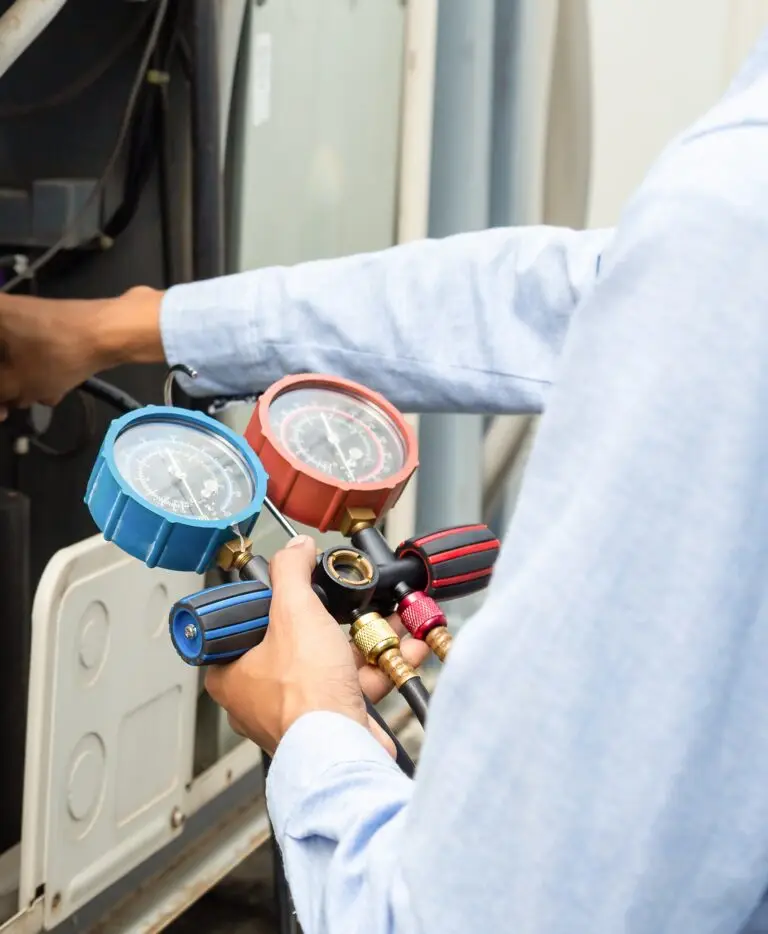
Equipment seasonality, local utility provider context (TECO vs. Duke Energy service territories affect rebate messaging), and the sharp demand spikes around Florida’s heat transition months make hyperlocal content exceptionally valuable for HVAC contractors. Neighborhood pages that reference local housing stock — the difference between a Westchase 2005 build with a 16-SEER Carrier versus a New Tampa new construction with a 20-SEER variable-speed system — convert at noticeably higher rates than generic efficiency content.
Plumbing
Water quality varies by municipality and water district — and homeowners in areas with hard water or high sulfur content are actively searching for plumbers who understand their specific problem. Hyperlocal plumbing content that addresses the water quality profile of specific ZIP codes, the pipe material common in different construction eras across your service area, and local code requirements for water heater permits outperforms generic plumbing content by a significant margin in competitive Florida markets.
Pest Control
Pest species and infestation patterns are intensely local. A Lakeland pest control page that discusses citrus root weevil pressure in the groves surrounding residential developments, or a Parrish page that addresses the mole cricket and fire ant issues specific to newer construction on former agricultural land, signals expertise that a generic “Florida pest control” page can never match.
Landscaping
Soil composition, drainage profiles, native plant species, HOA landscape requirements by subdivision, and micro-climate differences across a single metro all give landscaping content an enormous local differentiation opportunity. A Lakewood Ranch landscaping page that discusses the clay-heavy subsoil common in that corridor and the drainage solutions that work in that environment is fundamentally more useful — and more rankable — than a page about “lawn care in Sarasota County.”
Frequently Asked Questions
It depends on your service area and competitive landscape, but the right framing is: one page per city or neighborhood where you want to rank in the map pack. If you’re targeting 20 ZIP codes, you need 20 pages — each meaningfully differentiated, not templated with swapped city names. Start with your highest-revenue cities and build outward. A well-built page in your core market is worth more than 10 thin pages across markets you barely serve.
Only if they ARE duplicate content — which is exactly what hyperlocal strategy is designed to prevent. If your Westchase page and your Brandon page share 80% of their text with only the city name swapped, yes, Google will discount them. If each page has unique local context, references specific neighborhoods and landmarks, addresses local demand triggers, and speaks to the distinct character of that service area, they’re not duplicates — they’re a geographic content portfolio. The differentiation work is the value.
New pages on an established domain with decent authority can rank on page one within 2–8 weeks for moderate-competition local terms. For highly competitive city targets, expect 3–6 months for meaningful map pack penetration. On newer domains, the timeline extends — but the right content structure, combined with consistent link building and GBP optimization, compresses it significantly. The contractors we work with who built topical authority with national content first tend to see new local pages index and rank faster than those who build city pages in a topical vacuum.
Yes — with the right workflow. AI can produce a strong first draft when given highly specific local prompts: housing stock data, named neighborhoods, local pest species, soil types, seasonal demand patterns. The mistake most contractors make is using AI to produce generic content fast, then calling it hyperlocal because they added the city name. The research and local specificity still has to come from somewhere — your own field knowledge, local industry data, or market research. AI accelerates the writing; it doesn’t replace the knowledge that makes the content actually local.
They’re not competing strategies — they compound together. Content without authority struggles to rank in competitive markets regardless of how local and specific it is. But backlinks pointing to a site with weak, generic content don’t move the needle as far as backlinks pointing to a site with strong, relevant content that Google already views as a topical authority. For most home service contractors entering a market, the fastest path to map pack dominance is building hyperlocal content depth while running a consistent link acquisition strategy in parallel. Neither alone is the full answer.
We work exclusively with home service contractors — no restaurants, no law firms, no e-commerce. That focus means our content templates, keyword research, and local SEO architecture are built specifically for trades like HVAC, plumbing, pest control, roofing, and landscaping. Every client gets ZIP code exclusivity in their package — we don’t put competing contractors on the same platform in the same trade and ZIP. And our content is written to be genuinely local, not templated. You can learn more about our approach on our local SEO services page or view our pricing tiers.