How to Get Roofing Leads That Actually Turn Into Booked Jobs
Rank for the Keywords That Drive Real Roofing Calls — Using SEO, Google Ads, LSAs, Referrals, and 11 More Proven Channels
You’re a great roofer. You do clean installs, honest inspections, and your crew shows up on time. But none of that matters if the phone is not ringing.
Getting roofing leads is the single biggest challenge most contractors face — and it is also the one thing that separates roofing companies that grow from roofing companies that stay stuck. If you have been searching for the best place to get roofing leads without overpaying for shared junk — this guide is built for you.
Whether you’re a one-truck operation trying to fill next week’s schedule or a multi-crew company chasing consistent commercial roofing leads, the strategies below will help you build a predictable pipeline of homeowners and property managers who need your services.
This is not a surface-level overview. We’re going deep into every channel — digital and traditional — so you can pick the best ways to get roofing leads for your market, your budget, and your goals. And we’re going to be honest about what works, what is overhyped, and what is flat-out wasting your money.
93%
of homeowners start with a Google search when they need a roofer
$8–$45
average cost per click for roofing keywords in Google Ads
46%
of all Google searches include local intent like “near me”
Why Roofing Leads Dry Up (And What to Do About It)
Before we get into tactics, it helps to understand why most roofing companies struggle to get roofing leads consistently. The answer is almost always one of three things:
They depend on a single channel
They chase volume instead of quality
They treat lead generation as a cost instead of an investment.
Relying on HomeAdvisor, Angi, or a single lead-buying platform means someone else owns your pipeline. The moment they raise prices, change the algorithm, or start sharing your roofing leads with five other contractors, your phone stops ringing.
The best ways to get roofing leads — the ones that compound over time — involve channels you own. Learning how to get your own roofing leads through your website, your Google rankings, your review profile, and your referral network is the difference between renting your pipeline and owning it.
The strategies below are organized from highest long-term ROI to quickest short-term wins. Most successful roofing companies use a combination of at least four or five of these to get roofing leads from multiple angles simultaneously.
1. Search Engine Optimization (SEO) — The Long Game That Pays Off Forever
If you want to get roofing leads without paying for every single click, SEO is where you start. Search engine optimization is the process of making your roofing website show up in Google’s organic results when homeowners search for things like “roof repair near me,” “roof replacement cost,” or “best roofer in [your city].”
Unlike paid ads, organic rankings keep working 24/7 without a daily budget. Once your pages rank, they generate roofing leads month after month while you focus on closing jobs and managing crews. This is why SEO consistently delivers the highest ROI of any roofing lead generation channel.
What Roofing SEO Actually Involves
Good roofing SEO is not about stuffing keywords into your homepage and hoping for the best. It is a system of interconnected tactics that work together to tell Google your company is the most relevant and trustworthy result for roofing searches in your area.
Core Roofing SEO Deliverables
✓ Service pages optimized for each offering — roof repair, replacement, inspection, storm damage, emergency tarping
✓ City and ZIP code pages for every area you serve, targeting “roofer in [city]” searches
✓ Technical SEO — site speed, mobile responsiveness, schema markup, crawl health
✓ Keyword research targeting buyer-intent terms, not vanity traffic
✓ Backlinks from relevant, high-authority sites in the roofing and home service space
✓ Blog content that answers real homeowner questions and supports your service pages
The key to getting roofing leads from SEO is targeting the right keywords.
A term like “roof repair” has massive volume but brutal competition. A term like “emergency roof tarping [your county]” has less volume but the person searching is holding a bucket under a leak and ready to hire immediately. You need both types of keywords to get roofing leads at every stage of the buying journey.
Pro Tip: Most roofing companies only target generic terms like “roofer near me.” The contractors who dominate get roofing leads from long-tail keywords like “emergency roof leak repair in [city],” “insurance roof claim process,” and “metal roof vs shingle cost.” These longer phrases convert at a much higher rate because they match a homeowner further along in the buying journey.
While SEO is arguably the best lead source overall, it takes time to grow. You can expect it to take about three to six months before you see meaningful results, and nine to twelve months before it becomes a dominant source of leads. But the compounding effect is real and well worth the wait.
Every page you build, every link you earn, and every review you collect adds to a snowball that your competitors cannot replicate overnight.
You can do SEO on your own, but it is a long game that requires careful attention and years of knowledge. As a busy business owner, you likely don’t have time to learn the skill, let alone apply it. This is why so many roofing contractors choose to hire an experienced roofing SEO agency to handle it.
If you’re considering this and want to understand what fair pricing looks like, we break down real-world numbers in our SEO pricing guide.
We also offer full pricing transparency for all of our SEO packages on our SEO pricing page so there are no surprises.
2. Google Business Profile — Own the Map Pack and Get Roofing Leads Locally
Your Google Business Profile (formerly Google My Business) is the single most important asset for getting roofing leads locally and early on int the SEO process.
GBP is an adjacent lead source to SEO. When a homeowner searches “roofer near me,” “emergency roofer near me,” or “roof repair near me,” a the three-pack of GBP listings often appears above organic results. This three-pack is golden real estate on Google because it generally at the very top of the search results and gets the majority of clicks.
If you’re not in that Map Pack, you are invisible to a huge chunk of potential customers who are ready to hire.
GBP Optimization Checklist for Roofers
Getting into the map pack is not luck — it is a system.
First, make sure your profile is fully completed with accurate business name, address, phone number, service area, hours, and categories. Choose “Roofing Contractor” as your primary category, then add secondary categories for every service you offer: roof repair, roof inspection, gutter installation, skylight installation, and so on.
You also want to add all of the services and products you offer and their descriptions along with pricing, if applicable. Plus, make sure to choose the areas you serve and write an engaging business description.
Upload real project photos every week — before-and-after shots of completed roofs, your crew in action, your wrapped trucks, and other related pictures. Google tracks photo engagement and rewards active profiles with better visibility, which means more leads landing in your inbox.
Write a weekly Google Post highlighting a recent project, a seasonal tip, or a promotion. Add your services with descriptions and pricing ranges when possible.
Most importantly, actively manage your reviews. Solicit reviews from satisfied clients immediately after completing the job and respond to every single review — positive and negative — within 24 hours. We will go deeper into reviews in the reputation section below.
Common Mistake: Many roofers set up their GBP once and never touch it again. Google rewards active, consistently updated profiles. A dormant profile with 10 photos from 2021 will lose ground to a competitor who posts weekly project updates and responds to every review within hours.
If you want to get roofing leads from the map pack, treat your GBP like a living marketing channel — not a one-time setup.
While GBP management is adjacent to SEO, it performs differently. It doesn’t have the long ramp-up period SEO has and is one of the faster organic traffic levers you can pull. But, you must manage is properly, which is why many roofing contractors rely on GBP experts, like the team at SEO For Home Service, to manage the GBP for them.
3. Google Ads (PPC) — Fast Roofing Leads When You Need Them Now
If SEO is the long game, Google Ads is the short game. Pay-per-click (PPC) advertising puts your roofing company at the top of search results immediately — but you pay for every click, whether that person calls you or not. For roofers, the average cost per click ranges from $8 to $45 depending on the keyword and your market.
Google Ads works best for roofing contractors who need roofing leads quickly — new companies building a customer base, established companies entering new service areas, or anyone who wants to fill gaps during slow seasons. The key is running ads alongside SEO, not instead of SEO. Ads fill the pipeline with roofing leads while your organic rankings build.
PPC Essentials for Roofers
The biggest mistake roofers make with Google Ads is sending all traffic to their homepage. Your homepage is designed for people who already know your brand.
Ad traffic needs a dedicated landing page that matches the exact search intent. If someone clicks an ad for “emergency roof repair,” they should land on a page about emergency services with a phone number at the top — not your general “About Us” page. This single change can double the number of roofing leads you get from the same ad spend.
Negative keywords are your best friend. Add terms like “DIY,” “how to,” “jobs,” “salary,” and “free” to your negative keyword list immediately. These searches will drain your budget without generating a single roofing lead. Also exclude cities and ZIP codes outside your service area to avoid paying for clicks you cannot serve.
PPC Channel
Cost Model
Best For
Lead Quality
Google Search Ads
Pay per click ($8–$45)
High-intent searches like “roof replacement [city]”
High
Google LSAs
Pay per lead ($45–$120)
Homeowners ready to hire now
Very High
Display Ads
Pay per impression or click
Brand awareness and retargeting
Low
Facebook/Instagram Ads
Pay per click ($1–$8)
Storm chasers, seasonal promos, brand building
Medium
A well-managed Google Ads campaign for a roofing company should aim for a cost per lead between $50 and $150 depending on the market. If your cost per roofing lead is above $200 consistently, something is broken — usually targeting, landing pages, or ad copy.
Track every call and form submission back to specific keywords so you know exactly which clicks turn into roofing leads.
4. Google Local Services Ads (LSAs) — Pay-Per-Lead, Not Pay-Per-Click
Local Services Ads sit at the very top of Google search results — above the map pack and above traditional Google Ads. They display your business name, review rating, hours, and a Google Verified badge. Homeowners can call you directly from the ad without ever visiting your website. If you want to get roofing leads fast from people who are ready to hire right now, LSAs are one of the most direct paths.
The critical difference between LSAs and standard PPC is the payment model. With LSAs, you only pay when someone actually contacts you through the ad — a phone call, a message, or a booking request. You do not pay for clicks from people who looked and left. This makes LSAs one of the most efficient ways to get roofing leads for contractors who want high-quality, high-intent contacts.
Important Update: Google Local Services Ads no longer offer the “Google Guarantee” badge for roofing contractors. LSAs now verify legitimacy and display a “Google Verified” badge instead. You still need to pass Google’s screening and verification process — license, insurance, and background checks — but the reimbursement program has changed. Do not let agencies sell you on “Google Guaranteed” placement. That language is outdated.
To get the most roofing leads from LSAs, you need three things working in your favor: a high review count (aim for at least 50 Google reviews with a 4.5+ star average), fast response times (Google tracks how quickly you answer the phone and penalizes slow responders), and an open budget. Capping your weekly LSA budget too low pushes your roofing leads to competitors with open budgets.
LSAs are a great supplement to your lead generation strategy, but they should not be your only channel. Google controls the cost per lead, the lead volume, and the rules — and all of those can change without notice. Own your roofing leads through SEO and your website, and use LSAs to layer on additional volume.
1–4
Search-Based Leads
SEO, GBP, PPC, and LSAs target homeowners who are actively searching for a roofer right now. Highest intent, highest conversion rates.
5–8
Digital Presence Leads
Your website, content, social media, and paid social build trust and keep you top-of-mind when a homeowner eventually needs roof work.
9–12
Relationship-Based Leads
Referrals, door knocking, direct mail, and strategic partnerships produce warm leads through personal connection and geographic targeting.
13–15
Trust & Retention Leads
Reviews, email marketing, and community involvement build long-term authority and turn past customers into a repeat-and-referral engine.
5. Your Website — The Hub That Converts Every Other Channel Into Roofing Leads
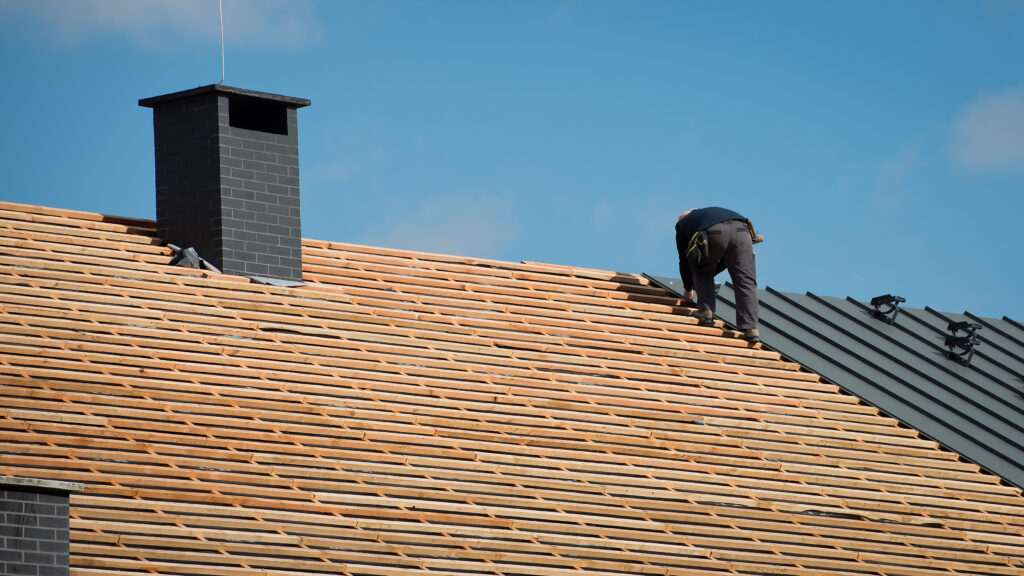
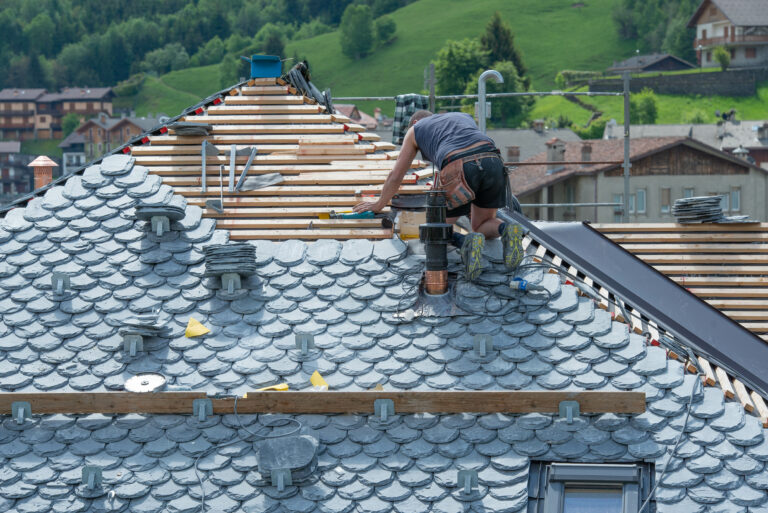
Building crew working on the roof sheeting
Every lead generation strategy on this list eventually drives traffic to one place: your website. If your site is slow, ugly, confusing, or missing basic conversion elements, you are paying to fill a leaky bucket. A well-built roofing website is not a cost — it is a roofing lead generation machine that multiplies the ROI of everything else you are doing.
A conversion-focused roofing website typically converts between 3% and 8% of visitors into roofing leads. If your site is below 3%, the issue is almost always one of three things: slow load time, weak calls to action, or missing trust signals. Test your site speed at PageSpeed Insights and aim for a performance score above 80 on mobile. Every tenth of a second you shave off load time puts more roofing leads in your pipeline.
6. Content Marketing — Get Roofing Leads by Answering Homeowner Questions
Content marketing for roofers means creating blog posts, guides, videos, and resources that answer the questions homeowners ask before, during, and after a roofing project. If you’re asking yourself “how to get more leads for my roofing business” and you have already covered the basics of SEO and GBP, content is your next lever. This is one of the most underutilized ways to get free roofing leads because most roofing companies think of their blog as an afterthought — if they have one at all.
The homeowner who searches “how much does a roof replacement cost” is not looking for a roofer yet — but they will be in two to six weeks. If your blog post answers that question thoroughly and positions your company as the expert, you are first in line when they are ready to get quotes. That is how content marketing turns information-seekers into roofing leads.
Content Ideas That Generate Roofing Leads
The best content topics come straight from your sales process. Think about the questions you get on every estimate call and turn each one into a blog post. Questions about cost, timeline, materials, insurance claims, warranties, and what to expect during a roof replacement — every one of those is a blog post that can rank in Google and bring qualified roofing leads to your site for years.
Here are some examples:
“How much does a new roof cost in [your state]?”
“Shingle vs. metal roof: which is better for [your region]?”
“How to file a roof insurance claim after a storm”
“Signs your roof needs replacing vs. repair”
“How long does a roof replacement take?”
“What to look for when hiring a roofer.”
These topics bring in homeowners who are in the research phase — exactly where you want to catch them before they become roofing leads for your competitor.
For related ideas on matching content to contractor-specific keywords, our guide on keyword research for contractors walks through the same framework we use across all trades.
Pro Tip: Every blog post should include a clear call to action. “Need a professional assessment? Call [phone] for a free roof inspection.” Content without a CTA is just free education for someone who will hire your competitor. The difference between content that generates roofing leads and content that generates nothing is almost always the CTA.
7. Social Media — Build Trust Before the Storm Hits
Social media will not fill your schedule tomorrow. It is not a direct roofing lead generation channel for most roofers. What it does is build familiarity, trust, and top-of-mind awareness so that when a homeowner needs roof work, your company is the first name they think of — and that familiarity converts into roofing leads over time.
For roofing contractors, Facebook is the most valuable platform because that is where your target homeowner demographic lives. Post consistently: before-and-after project photos, quick videos of your crew in action, customer testimonials (with permission), storm damage tips, and seasonal maintenance reminders. Join local community Facebook groups and be helpful — answer roofing questions without being salesy, and your reputation will grow organically. Over time, these interactions turn into roofing leads when group members need roof work and remember the contractor who gave helpful advice for free.
Instagram works well for showcasing visual project galleries, especially if you do high-end residential or architectural roofing. YouTube is an underused goldmine — a five-minute video of “5 Signs You Need a New Roof” can rank in both YouTube and Google search, generating leads for years.
8. Facebook and Instagram Ads — Get Roofing Leads Through Targeted Social Advertising
If you’re looking for how to get roofing leads on Facebook specifically, this section is for you. Unlike Google Ads where you target people actively searching, Facebook and Instagram ads interrupt people who are scrolling through their feed.
The lead quality is generally lower — these homeowners were not thinking about their roof until they saw your ad. But the cost per click is significantly cheaper ($1 to $8 compared to $8 to $45 on Google), and the targeting capabilities are powerful for generating roofing leads in specific neighborhoods.
Facebook ads work best for roofing companies in three scenarios:
The first is storm season — after a hail event or hurricane, run hyper-targeted ads to affected ZIP codes offering free inspections. The lead volume can be enormous.
The second is retargeting — show ads to people who visited your website but did not call. This keeps your company in front of warm prospects and recovers leads that would otherwise disappear.
The third is seasonal promotions — spring inspection specials, fall gutter packages, or winter maintenance plans.
The creative matters more than the targeting on social. Use real photos and real video from your job sites — not stock images. A 30-second drone clip of a completed roof install with a “Before → After” overlay will outperform any polished agency ad. Pair it with a lead form that only asks for name, phone, and address, and you have a system that can generate roofing leads at $15 to $40 per lead in most markets.
9. Referral Programs — Your Best Roofing Leads Come From Happy Customers
Ask any roofing company owner what their best lead source is and the answer is almost always the same: referrals. If you want to know how to get free roofing leads — or at least leads that cost time instead of ad spend — referral programs are the best place to start. Referred roofing leads close at higher rates, negotiate less on price, and are more likely to leave five-star reviews. The problem is that most roofers wait passively for referrals instead of building a system to generate them.
A formal referral program is simple to set up. After every completed job, send the homeowner a thank-you message (email, text, or handwritten card) that includes a referral incentive: “$100 gift card for every neighbor you send our way” or “$250 off your next service for each referral that books.”
Make it easy — give them a unique referral link or a stack of business cards with a code on the back. A single referral program, done consistently, can become your highest-volume source of quality leads at zero ad cost.
Do not limit referrals to customers. Real estate agents, property managers, insurance adjusters, home inspectors, and general contractors all interact with homeowners who need roof work. Build relationships with these professionals and create referral partnerships that benefit both sides. A real estate agent who recommends you for pre-sale roof inspections can become one of your highest-volume lead sources.
10. Door Knocking — Old School, Still Gets Roofing Leads
Yes, in 2026, knocking on doors still gets roofing leads. If you want to know how to get roof leads without spending money on digital advertising, door knocking is the original lead generation method — and it is far from dead. It is not glamorous and it is not scalable like digital marketing, but for roofers — especially storm restoration companies — door knocking remains one of the most effective ways to get roofing leads without spending a dollar on advertising.
The best approach is to target neighborhoods where you have recently completed a job or where a storm has caused visible damage. Show up with a branded shirt, a clipboard, and a genuine offer: “Hey, we just finished a roof on your neighbor’s house at [address] and noticed your shingles have some damage. Would you like a free inspection?” That is not a cold pitch — it is a warm introduction backed by proof you are already in the neighborhood. This approach consistently turns cold doors into warm leads.
The key to getting roofing leads from door knocking without burnout is to set specific goals: 50 doors per day, three to five booked inspections. Track your conversion rate by neighborhood, time of day, and pitch variation. Some roofers report a 5% to 15% booking rate from door knocking in storm-affected areas — far higher than any digital channel for converting strangers into leads.
Important: Check your local solicitation laws before sending canvassers door to door. Many municipalities require a solicitor’s permit, and HOA communities may have strict no-solicitation policies. Getting flagged on Nextdoor as a “pushy salesperson” can damage your brand in ways that outlast any leads you gained.
11. Direct Mail — Targeted, Tangible, and Underestimated for Roofing Lead Generation
Direct mail has quietly become one of the best-kept secrets for roofers who want to get more roofing leads in specific neighborhoods. While everyone else fights for attention on screens, a well-designed postcard lands on a kitchen counter where it sits for days.
The strategy is hyper-targeting. Use property records to identify homes with roofs over 15 years old, then send a postcard offering a free inspection. After a storm, mail every home in the affected ZIP codes within 48 hours. If you just completed a roof on a street, send postcards to every neighbor within a two-block radius with a photo of the completed project.
Each of these scenarios puts your roofing company in front of homeowners who are statistically likely to need roof work — making the resulting leads significantly warmer than cold outreach.
Direct mail conversion rates for roofers typically land between 0.5% and 2% — lower than digital channels in percentage terms but often higher in dollar value per lead because the homeowner has physically held your marketing material. Budget $0.50 to $1.50 per piece for design, printing, and postage. A 5,000-piece mailer at $1 per piece that converts at 1% produces 50 leads for $100 per lead — competitive with Google Ads in many markets.
12. Strategic Partnerships — Let Other Businesses Send You Roofing Leads
Some of the most consistent leads come from businesses that serve the same homeowner but do not compete with you. Identifying and building relationships with these partners creates a steady flow of warm, qualified leads that cost you nothing but time and reciprocity.
Insurance Adjusters & Public Adjusters: They work with homeowners navigating claims. Being their go-to roofer for inspections and supplementing means leads come to you pre-sold.
Real Estate Agents: Agents need fast, honest roof inspections for listings and buyer due diligence. Offer same-day turnaround and you become their default referral.
General Contractors & Builders: GCs who do not self-perform roofing need reliable subs. One relationship can produce 20+ jobs per year.
HVAC, Plumbing & Electrical Companies: Cross-referral agreements with complementary trades create a reciprocal lead pipeline. You send them HVAC leads, they send you roof leads
Approach partnerships with value first. Offer to send them referrals before asking for anything in return. Once the relationship is established, formalize it with a simple referral agreement that tracks who sends what. Some roofing companies pay referral fees of $100 to $500 per closed deal to partners — a small price for a pre-qualified lead that closes at two to three times the rate of a cold lead.
13. Reviews and Reputation Management — Social Proof That Turns Browsers Into Roofing Leads
Reviews are the single biggest trust signal for homeowners choosing a roofer. A BrightLocal study found that 76% of consumers read online reviews for local businesses, and the average consumer reads 10 reviews before feeling able to trust a company. For roofing — a high-ticket, high-trust purchase — that number is likely even higher.
Getting more roofing leads from your existing marketing becomes dramatically easier when you have a strong review profile. A roofer with 150 five-star reviews will outperform a competitor with 12 reviews in the map pack in ad click-through rates and website conversion rates. Reviews multiply the effectiveness of every other channel on this list and turn passive visitors into active leads.
How to Get More Reviews Systematically
Do not leave reviews to chance. Build a system that asks every customer at the right moment. The best time to ask is immediately after the job is completed and the homeowner has expressed satisfaction — not three weeks later when they have forgotten the details. Send a text message with a direct link to your Google review page. Follow up once (and only once) if they have not left a review within 48 hours.
Respond to every review — positive and negative — within 24 hours. Thank positive reviewers by name and mention the specific work you did (“Thanks, Sarah — glad the new GAF Timberline shingles look great on your home!”). For negative reviews, respond professionally, acknowledge the issue, and offer to resolve it offline.
How you handle criticism tells future customers more about your company than any five-star review — and it directly influences whether those future customers become roofing leads or click to the next company.
14. Email Marketing — Nurture Past Customers Into Repeat Roofing Leads and Referrals
Email marketing is not dead — it is just underused by roofers. If you are trying to figure out how to get more leads for your roofing business without constantly spending on ads, email is the highest-ROI channel most contractors completely ignore.
Every customer who has ever hired you should be on an email list that keeps your company top of mind for maintenance, referrals, and future projects. The homeowner who got a new roof in 2022 will need gutter work, an inspection, or a referral conversation at some point. If you are the company emailing them helpful tips every quarter, you are the company they call — and that is how past customers become a renewable source of leads.
Keep it simple. Send a seasonal email four times per year: a spring inspection reminder, a summer storm preparedness checklist, a fall gutter cleaning prompt, and a winter maintenance guide. Add a line at the bottom of every email: “Know someone who needs roof work? We offer $100 referral bonuses.” That single line, sent to your full customer list four times per year, will generate more referral leads than any formal program.
For new leads who request a quote but do not book immediately, set up a follow-up email sequence: a thank-you email within one hour, a “still have questions?” email at 48 hours, a helpful resource email at one week, and a final check-in at two weeks. This nurture sequence recovers roofing leads that would otherwise go cold and end up hiring your competitor.
15. Community Involvement — Build a Brand That Attracts Roofing Leads Organically
Sponsoring a local little league team, donating a roof to a veteran, volunteering at Habitat for Humanity, or hosting a booth at the county fair might not feel like roofing lead generation. But in the home services world, community visibility builds the kind of trust that advertising cannot buy.
When your company’s name is on the scoreboard at the little league field, on the banner at the church fundraiser, and in the local newspaper for donating to storm relief, homeowners remember. They may not need a roof today. But when they do, they call the company they have seen giving back to their community — not the one they found in a Google ad. Over time, community involvement compounds into a steady stream of inbound leads from people who already trust your brand.
Join your local Chamber of Commerce, attend BNI or networking groups, and look for opportunities to sponsor events that align with your customer base. The networking connections alone can produce steady referral leads, and the brand-building compounds over years.
Lead Sources to Approach With Caution
Not every lead source is worth your time and money. Certain channels have a reputation for burning roofers who are trying to get roofing leads, and you should know what to watch out for before committing budget.
Shared lead platforms (HomeAdvisor, Angi, Thumbtack): These platforms sell the same roofing lead to three to five roofers simultaneously. You are paying $30 to $80 for a lead where you have a 20% to 33% chance of even getting the homeowner on the phone. Closing rates on shared roofing leads are typically 5% to 10%, making the effective cost per booked job extremely high. Use them to fill gaps if needed, but never as a primary source of leads.
Lead aggregators that “guarantee” exclusive leads: Many of these companies generate roofing leads through misleading landing pages or outdated SEO content, then sell them as “exclusive” even though the homeowner has already submitted their information to multiple sites. Vet any lead provider by asking exactly how they generate roofing leads and whether the homeowner knows they are being connected to your company specifically.
Any agency promising “#1 rankings” or “guaranteed leads”: There are no guarantees in SEO or PPC. Any agency making these claims is either lying or using tactics that will get your site penalized. Choose partners who guarantee deliverables and transparency — not outcomes they cannot control. For more on this, check out our FAQ on SEO guarantees.
How to Build Your Roofing Lead Generation Stack
No single strategy on this list will fill your schedule alone. The question of how to get leads for roofing contractors comes down to stacking multiple channels that reinforce each other. The roofing companies that consistently get more roofing leads than they can handle are running four to six channels simultaneously. Here is how to think about building your stack based on where your company is today.
$
Startup Budget ($500–$1,500/mo)
GBP optimization, review generation, referral program, door knocking in target neighborhoods, 2 blog posts per month. Build the foundation before spending on ads.
$$
Growth Budget ($1,500–$5,000/mo)
Everything above plus local SEO, Google Ads on your top 10 keywords, LSA activation, and a conversion-optimized website with service and city pages.
$$$
Scale Budget ($5,000–$15,000/mo)
Full roofing SEO with content strategy, expanded Google Ads, Facebook retargeting, direct mail to targeted neighborhoods, email nurture sequences, and partnership development.
$$$$
Domination ($15,000+/mo)
Multi-location SEO, city-level PPC campaigns, full-funnel social advertising, video marketing, community sponsorships, and dedicated marketing staff or agency partnership.
The most important thing is to track every lead source. Use call tracking numbers, UTM parameters, and unique landing pages to know exactly where your roofing leads come from. When you know your cost per roofing lead and cost per booked job for each channel, you can make smart decisions about where to invest more and where to cut.
Ready to Stop Chasing Leads and Start Owning Them?
At SEO for Home Service, we help roofing contractors build lead generation systems that deliver calls, booked jobs, and real revenue — not vanity metrics.
SEO For Home Service, LLC Proud Member of the Manatee County Chamber of Commerce
About the Author:
This guide was written by Justin Cupler, CEO at SEO For Home Service, a digital marketing agency that works exclusively with home service contractors. Justin has over 15 years of SEO experience and specializes in home service contractor marketing, including roofing SEO, PPC, web design, and roofing lead generation. SEO For Home Service separates itself from the competition with ZIP code exclusivity — meaning we never work with competing roofers in your territory.
Frequently Asked Questions About Getting Roofing Leads
What is the best way to get roofing leads
The best way to get roofing leads depends on your budget and timeline. For long-term, lowest-cost roofing leads, roofing SEO and Google Business Profile optimization deliver the highest ROI. For immediate roofing leads, Google Ads and Local Services Ads produce results within days.
Most successful roofing companies combine four to six channels — SEO for the long game, ads for the short game, referrals for the highest quality, and content marketing to capture homeowners in the research phase before they become leads for someone else.
Will you work with a competing plumber in my area?
No. We guarantee ZIP code exclusivity. If we’re working with you, we won’t take on your competitor down the street. This limits our client capacity but ensures your plumber SEO investment isn’t benefiting your competition.
If your company handles both plumbing and HVAC, ask about our plumbing and HVAC SEO program.
How much does it cost to get roofing leads?
Roofing lead costs vary by channel and market. Google Ads typically produce leads at $50 to $150 per lead. LSAs range from $45 to $120 per lead. Facebook ads can produce leads at $15 to $40 in storm-affected markets. SEO leads, once rankings are established, can drop to $5 to $20 per lead because you are not paying per click. Shared leads from platforms like HomeAdvisor cost $30 to $80 but convert at much lower rates because multiple roofers receive the same lead.
How do I get free roofing leads?
Free roofing leads come from channels that cost time instead of money: optimizing your Google Business Profile, asking for referrals after every job, posting helpful content on social media, joining local Facebook groups and answering roofing questions, networking with real estate agents and insurance adjusters, and door knocking in neighborhoods where you have recently completed work.
SEO also produces “free” roofing leads in the sense that you do not pay per click once your pages rank, though building those rankings requires either time or agency investment.
How do I get roofing leads without door knocking?
If you want to know how to get roofing leads without door knocking, focus on digital lead generation. Start with SEO and GBP optimization to get found in Google searches, run Google Ads and LSAs for immediate lead flow, build a referral program with past customers and strategic partners, and use targeted Facebook ads after storm events.
A strong online presence combined with a systematic referral program can generate as many or more leads than even the most aggressive door-knocking operation — and the leads tend to be higher quality because the homeowner came to you.
How do I get commercial roofing leads?
Commercial roofing leads require a different approach than residential roofing leads.
Target property managers, facility managers, and building owners through LinkedIn outreach and industry-specific content.
Create dedicated commercial roofing pages on your website targeting terms like “commercial roof repair [city]” and “flat roof replacement [city].”
Build relationships with general contractors who sub out roofing work.
Attend commercial real estate and property management networking events.
Commercial roofing leads take longer to close but the project values are significantly higher.
How do I get roofing leads from insurance companies?
Learning how to get roofing leads from insurance companies is one of the most valuable skills in the roofing industry. Building relationships with insurance adjusters and public adjusters is the most direct path. Position yourself as a reliable, honest roofer who provides thorough inspections and accurate documentation.
Many adjusters prefer working with roofers they trust because it makes their job easier. Also create content on your website about the insurance claim process — “How to File a Roof Insurance Claim” pages rank well and attract homeowners navigating storm damage claims who need a roofer to do the inspection. These homeowners become high-value leads because the insurance company is footing the bill.
Can I get roofing leads online without an agency?
You can, but there is a real time cost. Managing Google Ads, writing content, optimizing your GBP, building links, and running Facebook ads while also running a roofing company is a full-time job on top of your full-time job.
Many roofers start with DIY efforts to get roofing leads and eventually partner with an agency once they realize the opportunity cost of doing it themselves. If you want to learn what tools help with the DIY approach, our best SEO tools for contractors guide is a good starting point.