If you run an HVAC, plumbing, electrical, roofing, pest control, or landscaping business, you’ve probably heard of Google Local Services Ads for contractors. Maybe you’ve tried them, had mixed results, and moved on. Or maybe you’ve never set them up because the verification process looked complicated and you weren’t sure if the leads would be worth it.
Here’s what’s true in 2026: LSAs are still one of the most efficient paid lead channels available to home service contractors — but only if you understand how the platform actually works today. The rules changed substantially in late 2025. Contractors who understand the new system are winning. Contractors running their LSA profiles on autopilot from a 2023 setup guide are leaving serious money on the table.
This guide covers everything: what LSAs are, how the new verification system works, what leads cost by trade, how the ranking algorithm works, and how to stack LSAs with your SEO and Google Business Profile to dominate your local market.
What Are Google Local Services Ads?
Google Local Services Ads are a pay-per-lead advertising format built specifically for local service businesses. Unlike traditional Google Ads where you pay per click whether the searcher contacts you or not, LSAs charge you only when a customer calls or messages you directly through the ad.
More importantly: LSAs appear at the very top of Google search results — above traditional paid ads and above the local map pack. When a homeowner in your service area searches “HVAC repair near me” or “emergency plumber,” your LSA ad can be the first thing they see.
What makes LSAs different from every other ad format:
- Pay per lead, not per click — you’re only charged when someone contacts you through the ad
- Above-the-fold dominance — LSA ads sit above both PPC ads and the organic map pack
- Google Verified badge — your business passes background checks, insurance verification, and license review before your ad runs
- Review integration — your Google review count and rating display directly in the ad
- Dispute credits — you can dispute leads that don’t meet Google’s quality criteria and receive credits
- Service area targeting — ads only show to searchers within your defined geographic coverage
If you want to see how LSAs fit into a trade-specific lead strategy, our guide to Local Services Ads for electricians goes deeper on one of the highest-performing verticals on the platform.
Source: BrightLocal, Local Services Ads Click Study
The October 2025 Badge Changes Every Contractor Needs to Know
If you’ve read any other LSA guide online recently, there’s a good chance it’s already outdated. In October 2025, Google fundamentally restructured its LSA trust system — and on November 7, 2025, discontinued the consumer money-back guarantee that had defined the program since its launch.
Here’s what changed and what it means for your ads:
Old system: Three separate badges — Google Guaranteed (trades), Google Screened (professionals), and License Verified. Each carried different verification requirements and consumer protections.
New system: A single unified “Google Verified” badge replaced all three. The Google Guaranteed consumer protection program — which reimbursed customers up to $2,000 if they were dissatisfied with work — was discontinued on November 7, 2025.
What else changed: The standalone LSA mobile app was retired in January 2025. All LSA management now happens through the Google Ads platform. Google Business Profile and LSA profiles must now be linked and match exactly (mandatory since November 2024).
The practical impact: the badge is now less of a consumer-facing trust signal than it was before (the money-back guarantee was what gave “Google Guaranteed” its power). But the verification requirements behind that badge remain — and those requirements are what filters your ad out from unverified competitors.
Since November 2024, Google requires your Google Business Profile and Local Services Ads profile to link and display consistent information — same business name, address, phone number, and service categories. Mismatches between the two profiles will suppress your LSA ad delivery. Check both profiles before troubleshooting anything else if your ads have stopped running. For a full GBP optimization checklist, see our guide to Google Business Profile optimization for home service companies.
The Google Verified Badge: How to Get It
Getting the Google Verified badge is the first gate you have to clear before your LSA can run. The process starts at ads.google.com/local-services-ads and involves four verification layers that vary by trade and state.
- Business license verification — Google checks that you hold a valid license for your trade in your state. Requirements vary significantly: plumbers and electricians in most states need active state licenses; landscapers in many states do not. Check Google’s trade-specific requirements before you start.
- Insurance verification — You’ll need to upload proof of general liability insurance. Some states and trades also require workers’ compensation documentation. Your insurance agent can provide a certificate of insurance; make sure it hasn’t expired.
- Background checks — Background checks apply to the business owner and every employee who enters customer homes. This is the step that catches most contractors off guard. Budget 2–4 weeks for processing, longer if your business has multiple technicians who all need to be screened.
- Business registration verification — Google verifies your business is legally registered in your state. If you operate as an LLC or corporation, this is generally straightforward. Sole proprietors may need additional documentation depending on their state.
Total timeline from application to first ad running: 2–6 weeks for most contractors, assuming documentation is complete and no flags come up in background screening. Start this process before your busy season — not during it.
LSA verification isn’t one-and-done. Google periodically re-checks your license and insurance on file. If your general liability policy renews and you don’t update the certificate in your LSA account, your ads can pause automatically without warning. Set a calendar reminder to update your insurance certificate 2 weeks before your policy renews every year.
What LSA Leads Actually Cost by Trade
LSA pricing is set by Google through a bidding system, but unlike Google Ads, you’re bidding on a weekly budget and Google manages the per-lead price within that budget. Your cost per lead varies significantly by trade, market size, and competition level.
These are current 2026 cost-per-lead benchmarks for competitive markets. Smaller metros typically run 20–40% lower:
The most important number isn’t cost per lead — it’s cost per booked job. A $60 HVAC lead that converts to a $1,800 repair is an excellent outcome. A $20 landscaping lead that turns into a $300/month maintenance contract compounds over years. Always evaluate LSA ROI against job value and customer lifetime value, not just the lead cost.

How the LSA Ranking Algorithm Works
Getting verified and running a budget is the floor. Where your ad ranks among other verified competitors — and whether it shows up at all on a given search — is determined by Google’s LSA ranking algorithm.
Unlike Google Ads which ranks primarily on bid and Quality Score, LSA ranking weighs several factors that are squarely in your control:
Review Count and Average Rating
This is the single biggest ranking lever most contractors can pull. Google is explicit that review count and average rating are major LSA ranking signals. A contractor with 180 reviews averaging 4.9 stars will outrank a competitor with 30 reviews at 5.0 stars almost every time — volume and quality both matter. Review velocity (how recently you’ve been getting reviews) is also a factor; a steady stream of new reviews outperforms a large but stale review portfolio. See our guide on how to systematically get more reviews and our deep-dive on reputation management for contractors for practical systems you can implement immediately.
Responsiveness
Google tracks how quickly you respond to LSA leads and what percentage you respond to. Letting calls go to voicemail, ignoring messages in the LSA inbox, or having a high rate of missed leads actively hurts your ranking. This is one of the most overlooked ranking factors — it’s not enough to have a great profile if your phone isn’t being answered.
Business Hours Coverage
LSA ads prefer businesses that are reachable. Contractors with broader business hours — especially those who offer 24/7 availability for emergency services — get preference in the algorithm over businesses with limited hours. If you only show 9–5 coverage, you’re invisible on evenings and weekends when a significant share of emergency HVAC, plumbing, and electrical searches happen.
Proximity to the Searcher
Google factors in how close your business location (or service area) is to the person searching. This is a mild signal compared to the others, but it rewards contractors who have their service area accurately set rather than over-expanded. For a full breakdown of how Google weighs proximity alongside other local ranking factors, see our Google Maps ranking factors guide.
Job Type Match
Your LSA profile lists the specific job types you offer. If a homeowner searches “water heater installation” and your profile doesn’t list that job type, your ad is less likely to appear for that search. Build out your job types completely — the more specific, the better.
How to Dispute Bad Leads and Get Credits
One of the most valuable features of LSAs — and the one most contractors ignore — is the ability to dispute leads that don’t meet Google’s quality criteria. A disputed lead, if approved, results in a credit back to your account.
As of July 2024, Google moved from a manual dispute review process to an AI-automated credit system. This has been a significant frustration point for many contractors. The automated system approves some disputes quickly, but has a higher rejection rate for nuanced cases. Understanding which dispute types get approved — and how to submit them properly — is worth real money.
Lead Types You Can Dispute
- Wrong service area — the caller is outside your set service area
- Out-of-scope job type — the caller needs a service you don’t offer (and didn’t list in your profile)
- Already a customer — the call came from an existing client, not a new lead
- Spam or robocall — automated calls, not real homeowners
- Wrong business — caller was trying to reach a different company
- No service needed — caller wasn’t looking for home services (misdials, surveys, solicitors)
How to Dispute Effectively
Disputes must be submitted within 30 days of the lead charge. To maximize approval rates with the automated system:
- Submit immediately — don’t batch disputes at the end of the month
- Select the most specific dispute reason available; vague reasons get auto-rejected at higher rates
- For out-of-area leads, note the caller’s address in the dispute notes if you captured it
- For spam calls, describe the call specifically: “Automated call, no human voice, held for 8 seconds”
- Keep your recorded call log — Google may request evidence for certain dispute categories
You cannot dispute a lead simply because the customer didn’t book or the job wasn’t a good fit. If a real homeowner called you looking for a real service you offer, that’s a valid lead even if they went with a competitor. LSA charges you for the contact opportunity, not the conversion — that part is on your sales process.
LSA Profile Optimization: What Actually Moves the Needle
Getting your LSA live is table stakes. The contractors pulling high lead volume at the lowest cost are the ones who treat their LSA profile as an asset to be actively managed, not a set-it-and-forget-it ad account.
Optimize Your Business Description
Your LSA business description is the one place you can speak directly to the searcher before they decide whether to call. Most contractors leave this generic. Use it to state your core differentiators specifically: response time, specialties, service area, and anything that sets you apart from the other three listings on the screen. Write it like you’re answering the question “why should I call you instead of the other two?”
Build Your Review Velocity System
Reviews are the LSA algorithm’s loudest signal. The contractors ranking first in competitive markets aren’t there by accident — they have a system. Every completed job gets a review request, sent within 2 hours of job completion while the customer’s satisfaction is highest. Text message requests outperform email for response rate. A simple “Thank you for having us out today — if we earned it, we’d really appreciate a Google review: [link]” converts at 15–25% when sent promptly. For a full playbook on turning reviews into a lead generation asset, see our guide on proven tips to get more electrical jobs — the review strategy applies across every trade.
Set Your Budget Strategically
Google’s LSA budget system works on a weekly basis. If you underfund your budget, Google will throttle your ad delivery even during peak demand periods. The right weekly budget is higher than most contractors set it — especially for emergency-service trades. Start at 2x what you think you need, monitor cost per lead and lead quality for 30 days, then adjust. It’s easier to scale down a working campaign than to diagnose a budget-throttled one.
Keep Your Job Types Granular
Don’t just select “Plumbing” — select every specific job type you want leads for: water heater installation, drain cleaning, sewer line repair, toilet repair, bathroom remodel, and so on. Google matches searches to job types in your profile. The more granular your job type list, the wider your match surface across different search queries.
Respond Within 15 Minutes
Google tracks your response time. But beyond the algorithm, there’s a practical reason to respond immediately: homeowners searching for home services, especially emergencies, are calling multiple contractors simultaneously. The first contractor who picks up the phone gets the job in the majority of cases. A 15-minute callback window converts at dramatically higher rates than a 2-hour window.
LSA vs. Google Ads vs. Organic SEO: The Full Picture
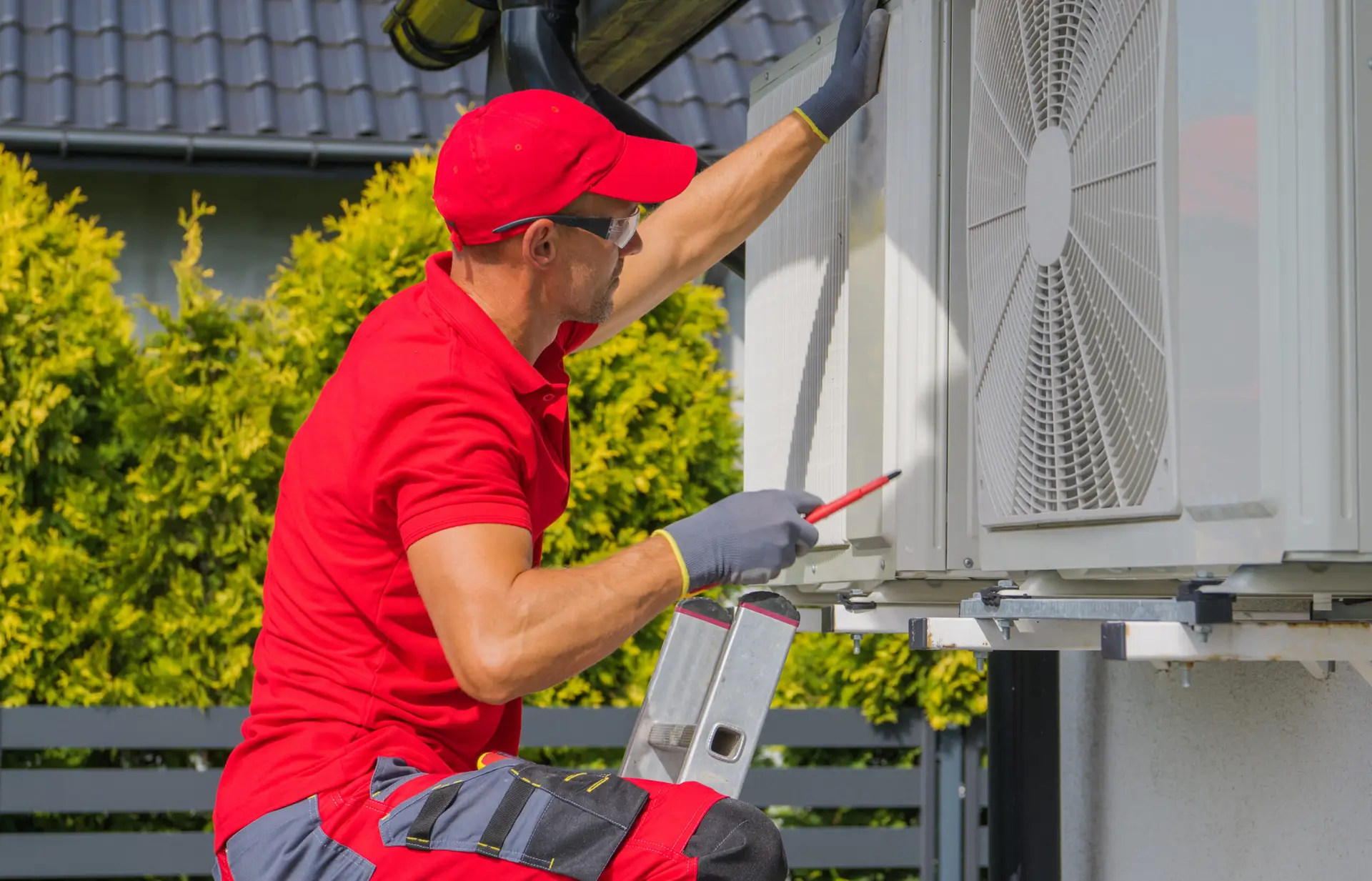
Most guides treat LSAs, Google Ads, and SEO as alternatives. They’re not — they occupy different positions on the page and serve different roles in a complete lead generation strategy. The contractors consistently generating the highest volume of inbound calls are running all three.
| Channel | Position on Page | Cost Model |
|---|---|---|
| Google LSA | Position #1 — above everything | Pay per lead (contact) |
| Google Ads (PPC) | Position #2 — below LSA, above maps | Pay per click |
| Local Map Pack | Position #3 — below PPC | Free (earned through SEO + GBP) |
| Organic SEO | Position #4 — below map pack | Free (earned through content + links) |
The strategic reality: LSAs give you top-of-page visibility immediately but stop the moment you stop paying. SEO builds a compounding asset that generates leads without ongoing ad spend. The contractors who win long-term run LSAs for immediate lead flow while building SEO to reduce their cost-per-lead over time. If you want to dig deeper into the trade-offs for your specific vertical, we’ve covered this for HVAC (SEO vs PPC), plumbing (SEO vs Google Ads), and roofing (Google Ads vs SEO cost comparison).
This is why our SEO programs for home service contractors always account for the full SERP picture. Your website’s local SEO authority and your Google Business Profile directly support your LSA rankings — it’s not a coincidence that the contractors with the strongest organic presence also tend to dominate LSA. If you’re new to local SEO, start with our complete guide to local SEO for home service businesses. Google’s algorithm rewards businesses that show up as authoritative across multiple channels.
LSA Strategy by Trade
HVAC Contractors
HVAC is the highest-volume LSA trade in most markets. The seasonal demand pattern — spikes in spring and fall when systems fail at season transitions — means LSA budgets need to flex. Run higher budgets in April–May and September–October; pull back in January–February and July–August. Emergency service coverage (24/7 business hours in your LSA profile) is especially valuable for HVAC because a large share of HVAC searches happen evenings and weekends when systems fail and homeowners need someone immediately. Pairing a strong LSA presence with HVAC SEO and HVAC PPC lets you own all three visible positions on the SERP simultaneously. Learn more about our full HVAC digital marketing services.
Plumbers
Plumbing has a high share of emergency searches — burst pipes, no hot water, backed-up drains — where the homeowner is calling the first person who picks up. Responsiveness is even more critical for plumbing than other trades. Job type granularity matters too: list water heater installation separately from water heater repair, drain cleaning separately from sewer repair. These searches have different economics and different competition levels. For contractors running a combined SEO and paid strategy, our plumber SEO services and plumbing lead generation programs are built specifically to work alongside LSA.
Electricians
Electrical LSA leads have strong conversion rates because homeowners are rarely shopping on price for electrical work — they want someone licensed and trustworthy fast. The Google Verified badge carries extra weight for electricians because homeowners are acutely aware of the risk of unlicensed electrical work. Your review strategy should specifically highlight the safety and compliance angle, not just satisfaction. Our electrician SEO services and electrician lead generation programs are designed for contractors running LSA alongside organic — see the full electrician digital marketing overview.
Roofers
Roofing LSA leads are the highest-ticket in the trades, which justifies a higher cost per lead. The key is managing lead quality — storm-chasing contractors and insurance-claim jobs have very different conversion economics than standard replacement leads. Set up your job types to reflect the work you want, and dispute aggressively for out-of-scope leads (if you’re a replacement specialist and you’re getting repair quote calls, those are legitimate dispute candidates). For a complete growth strategy, see our roofing SEO services and roofing lead generation — or the full roofing digital marketing hub.
Pest Control
Pest control has the best LSA cost-per-lead economics of any home service trade, especially for companies that convert to recurring service contracts. A $20 lead that becomes a $800/year recurring client has an extraordinary lifetime ROI. For pest control, the focus should be on conversion rate — answering calls immediately, booking on the first contact, and offering same-week service. Our pest control SEO services and pest control PPC management are built to compound on top of LSA lead flow.
Landscapers and Lawn Care Companies
Landscaping and lawn care have among the lowest LSA cost-per-lead in the trades, making them excellent candidates for aggressive LSA investment during spring ramp-up. The volume is highly seasonal, so budget management is critical — don’t run flat budgets year-round. Combine LSA with landscaping SEO or lawn care SEO to hold organic positions through the shoulder season when paid volume dips.
Other Trades
LSA is available for cleaning companies, moving companies, remodeling contractors, and junk removal companies as well — availability and cost-per-lead vary significantly by market. Check your ZIP code at ads.google.com/local-services-ads to confirm your trade and location are supported before investing time in verification.
Frequently Asked Questions
The Google Guaranteed consumer money-back program was discontinued on November 7, 2025. Google replaced the separate Google Guaranteed, Google Screened, and License Verified badges with a single “Google Verified” badge. The verification requirements (license check, insurance, background checks) still apply — but the consumer-facing reimbursement program no longer exists. Many guides and even some LSA help documentation still reference the old system, so verify you’re reading current information before making decisions based on it.
Start with a weekly budget equal to 5–10 times your target cost per lead for your trade. For an HVAC contractor targeting a $50 cost per lead, that means a $250–$500/week starting budget. Google will throttle ads on budgets that are too low relative to market demand — underfunding is one of the most common reasons new LSA campaigns underperform. Run at full budget for 30 days before making any adjustments; the first month is data collection as much as it is lead generation.
Indirectly, yes — and more than most contractors realize. Google’s local algorithm evaluates your business’s overall authority, and that includes your website’s local SEO signals, your Google Business Profile, and your review profile. Contractors with strong organic SEO and a well-optimized GBP tend to see better LSA performance than those without — because the underlying signals Google uses to evaluate your business quality feed across multiple products. It’s one reason we always look at LSA performance in the context of the full local SEO picture for our clients. If you want to understand the full framework, our complete guide to local SEO for home service businesses is a good starting point, and our home service SEO pricing guide covers what it costs to build that foundation.
The key differences are placement, cost model, and lead quality. LSA ads appear above Google Ads on the page. LSAs charge per lead (actual contact), while Google Ads charge per click regardless of whether anyone calls. LSA leads are generally higher quality because the searcher chose to contact you from a verified listing — they’ve seen your reviews and your Google Verified badge before they call. The tradeoff is less control: with Google Ads you control the keywords, ad copy, and landing page. With LSAs, Google matches your ad to searches automatically. If you’re evaluating the full paid stack for your trade, see our dedicated pages on HVAC PPC and pest control PPC management.
Typically 2–6 weeks for most contractors with complete documentation. The background check process is usually the longest step, especially if you have multiple employees who need to be screened. The process can extend to 8+ weeks if documentation comes back incomplete or if there are flags in the background check that require resolution. Start the verification process at least 6 weeks before your target launch date — don’t wait until your busy season starts to begin the paperwork.
Yes — and here’s why. LSAs appear above the map pack, so a strong map pack ranking doesn’t protect your click share from competitors running LSAs above you. When a competitor’s LSA is above your organic map pack listing, a meaningful share of searchers who would have called you go to them first. Running LSAs on top of a strong organic position means you can occupy both the top sponsored position and the top organic position simultaneously, which is a dominance play that’s very hard for competitors to break through. For most competitive trades in most metro markets, running both is the right answer. Our electrician lead generation and plumbing lead generation pages show how we structure this full-funnel approach for the most competitive trades.
Google currently supports over 70 service categories in the U.S. For home service contractors, the most common supported trades include HVAC, plumbing, electrical, roofing, pest control, landscaping, lawn care, garage door repair and installation, window cleaning, junk removal, house cleaning, moving, painting, and foundation repair, among others. Availability varies by geographic market. Check ads.google.com/local-services-ads and enter your ZIP code to see which categories are available in your specific market before beginning the verification process. We have dedicated digital marketing programs for most supported trades: HVAC, plumbing, electrical, roofing, pest control, landscaping, lawn care, cleaning, moving, junk removal, and remodeling and construction.